Mitigating Condensation Buildup on AC Vents During the October Climate Transition

When Autumn Arrives but the Humidity Lingers
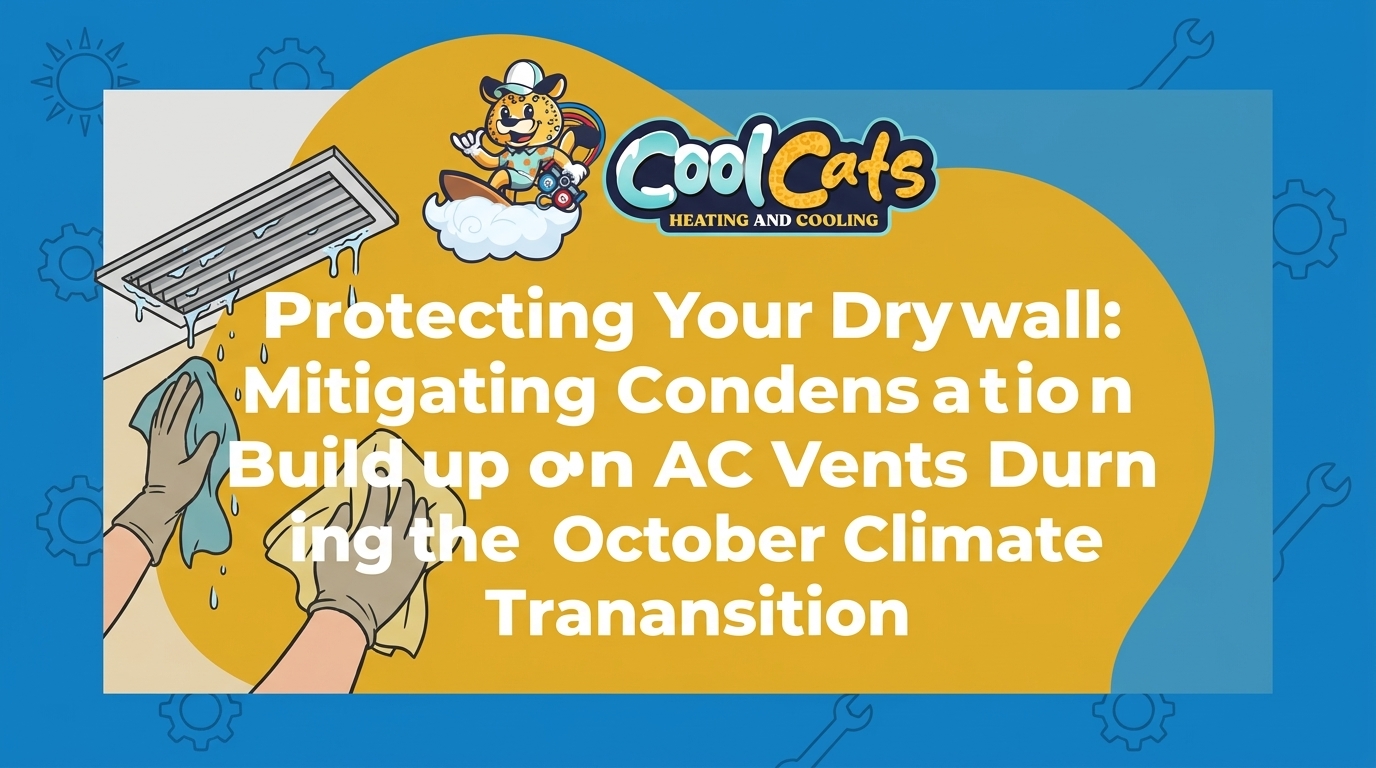
Autumn on the coast is highly anticipated, but mitigating condensation buildup on AC vents during the October climate transition is a challenge many homeowners face when the calendar changes but the humidity refuses to leave. Here at CoolCats, LLC, our team receives frantic calls every fall from homeowners who walk into their living room on a mild afternoon, look up, and notice unsettling water droplets clinging to the metal slats of their ceiling registers. It is a frustrating sight that immediately raises concerns about the integrity of the surrounding ceiling.
That localized moisture is more than just a seasonal nuisance. When ceiling registers sweat, that water eventually drips or wicks outward, threatening the surrounding drywall with unsightly water stains, bubbling paint, or even hidden mold growth. The immediate challenge is figuring out exactly what you are dealing with. Is this just a temporary quirk of the changing weather, or are you looking at a serious duct insulation failure?
Managing this specific seasonal transition requires a clear understanding of how coastal air interacts with your cooling system. By addressing the root cause of the moisture, you can protect your home's structural elements and ensure your system operates safely through the rest of the season.
The Anatomy of the October Dew Point Trap
To understand why your ceiling registers are suddenly dripping, it helps to look at the basic physics of moisture and temperature. Condensation forms whenever a surface temperature drops below the dew point of the air surrounding it. You see this every time you pour a glass of ice water on a warm day—the cold glass chills the air immediately touching it, forcing that air to release its invisible water vapor as liquid droplets.
During the early fall months, your home's ductwork acts exactly like that cold glass of water. In our years of servicing HVAC systems across Jacksonville Beach, we regularly see this dynamic in action. On a warm October afternoon, your air conditioning might kick on to cool the house down by a few degrees. The chilled air drops the temperature of the metal vent registers significantly. When that cold metal comes into contact with highly humid indoor air, it creates what industry professionals call a dew point trap.
This clash is actually more common in autumn than during the peak of summer. In July, your cooling system runs constantly, which actively pulls moisture out of the air and keeps the indoor humidity low. In fall, fluctuating daily temperatures mean your system only runs in short, intermittent bursts. These short cycles cool the air but shut off before they can effectively dehumidify the house, leading to a stark mismatch between the indoor vs outdoor dew point temperature.
Understanding Indoor vs. Outdoor Moisture Levels
The transition season creates unique challenges for managing indoor air. Here is how the moisture levels become imbalanced:
• Open window infiltration: On milder fall days, it is tempting to open windows to let in a breeze. While the air feels cooler, it often carries a massive amount of invisible moisture into your living spaces.
• Short cooling cycles: When the system finally kicks on later in the afternoon, it quickly satisfies the thermostat's temperature setting and shuts down.
• The moisture gap: Because the cycle is so brief, the system leaves the newly introduced humidity inside the house, raising the indoor dew point drastically.
When the indoor dew point temperature climbs higher than the physical temperature of the chilled metal vent, condensation is mathematically guaranteed to form.

Why Coastal Living Amplifies Fall Condensation
Geographic location plays a massive role in how severe this seasonal sweating becomes. For Jacksonville Beach coastal homes, our technicians typically see the threat of condensation amplified by the persistent marine layer and the constant influx of warm, moist air rolling off the ocean. While inland areas might experience a sharp, dry drop in temperatures during fall, coastal environments often hold onto their humidity much longer.
This persistent coastal moisture stresses your home's mechanical systems in unique ways. The contrast between the chilled indoor air inside your ductwork and the lingering high outdoor humidity creates a constant battle. Homes near the coast naturally "breathe" in this humid air through minor gaps in doors, windows, and attic spaces. When the indoor environment becomes saturated, the ductwork and ceiling registers bear the brunt of the condensation load.
Managing the home's overall indoor air quality is the most effective way to mitigate these extreme moisture swings. By controlling the amount of water vapor suspended in your living spaces, you can raise the threshold at which condensation forms, keeping your metal registers dry even when the system occasionally runs on a muggy October afternoon.
Recognizing the Threat to Your Drywall and Ceilings
While wiping a few water droplets off a metal vent might seem like a minor chore, the real danger lies in what that moisture does to the surrounding building materials. Gypsum drywall is highly porous. When condensation forms on a register, it often wicks backward into the raw edge of the drywall ceiling cutout, absorbing water like a sponge.
The early warning signs of drywall damage during the October climate transition are often subtle. You might notice:
• Bubbling or peeling paint: As moisture pushes outward from behind the paint layer, it breaks the adhesive bond, causing unsightly blisters around the vent.
• Yellow or brown discoloration: Water stains often appear as faint, rusted-looking rings spreading outward from the corners of the register.
• Soft spots: If you press gently on the ceiling directly next to a sweating vent and it feels spongy, the gypsum core has already lost its structural integrity.
When condensation goes unaddressed, the risk of hidden mold growth in ceiling cavities increases exponentially. Mold spores thrive in dark, damp environments where they can feed on the paper backing of saturated drywall. This is why our team at CoolCats, LLC takes a holistic approach to home comfort. In our experience, protecting a house means going above and beyond just fixing mechanical parts; it means safeguarding the structural integrity of the home from secondary issues like drywall rot and poor air quality.
Seasonal Quirk vs. Duct Insulation Failure
Determining whether you are dealing with a temporary weather phenomenon or a mechanical failure is the most critical decision point for a homeowner. A pattern we see often in local coastal homes is that a seasonal quirk usually resolves itself as the weather stabilizes, but a duct insulation failure will continue to damage your home until it is professionally repaired.
When the insulation surrounding the duct boot (the metal connector that attaches the ductwork to your ceiling) degrades or falls away, it allows unconditioned, sweltering attic air to make direct contact with the chilled metal. This creates a massive, localized drop in the indoor vs outdoor dew point temperature right at the ceiling level, resulting in heavy, persistent sweating.
• Timing of Condensation — Seasonal Quirk: Only during extreme weather swings or rainy fronts. — Duct Insulation Failure: Constant, regardless of outdoor weather conditions.
• Volume of Water — Seasonal Quirk: Light mist or small droplets on the metal face. — Duct Insulation Failure: Heavy dripping, pooling water, or soaked drywall.
• Location — Seasonal Quirk: May happen across multiple vents simultaneously. — Duct Insulation Failure: Usually isolated to one or two specific problem vents.
• Resolution — Seasonal Quirk: Clears up when indoor humidity is lowered. — Duct Insulation Failure: Never resolves without physical repairs in the attic.
When to Monitor and When to Act
If you suspect a seasonal quirk, it is safe to gently wipe down the affected vents with a dry microfiber cloth and monitor how quickly the moisture returns. However, if you notice persistent dripping or any signs of drywall discoloration, it is time to act. Scheduling professional AC maintenance before the winter heating season begins is crucial. Technicians can assess the vapor barriers and duct boots in the attic. Homeowners should never attempt DIY duct resealing, as improper materials or techniques can trap moisture inside the insulation, accelerating mold growth and rust.
A Hidden Danger: When Temperature Swings Lead to Freezing
The same fluctuating conditions that cause your ceiling vents to sweat can trigger other, more severe system anomalies. The October climate transition is notorious for pushing HVAC equipment out of its ideal operating parameters. When the indoor vs outdoor dew point temperature fluctuates wildly, the entire refrigeration cycle is forced to adapt to rapidly changing heat loads.
One of the most common secondary issues during this time is evaporator coil freezing. As the cooler fall nights set in, the ambient temperature in your home drops. If your system runs to combat daytime humidity but continues running into the cooler evening, the temperature of the refrigerant coil can plummet below freezing. Any moisture pulled from the air will instantly turn to ice on the coil rather than dripping safely into the drain pan.
This creates a cascading failure. Ice blocks the airflow through the system, which makes the coil even colder, leading to a solid block of ice that completely shuts down your cooling capacity. Understanding the broader impact of fall weather on your equipment highlights why airflow management and humidity control are so tightly connected. If you want to learn more about this specific phenomenon, you can read about why your AC freezes when humidity drops in early fall.
Safe Mitigation Strategies for Homeowners
While serious duct issues require professional intervention, there are several safe, highly effective steps you can take to reduce indoor humidity and prevent seasonal condensation. By actively managing your home's airflow, you can protect your drywall and keep your system running smoothly.
For Jacksonville Beach coastal homes, our crew has found that proactive humidity management is the best defense against the autumn dew point trap. We recommend the following effective mitigation strategies:
1. Check your thermostat fan setting: Ensure your fan is set to "AUTO" rather than "ON." When the fan runs continuously, it takes the moisture that the system just pulled out of the air and re-evaporates it off the wet indoor coil, blowing it right back into your living space.
2. Open all vent registers fully: It is a common misconception that closing vents in unused rooms saves energy. In reality, it restricts airflow, builds up static pressure, and creates localized cold spots where condensation is guaranteed to form.
3. Replace your air filters: A clogged filter slows down the air moving across the cooling coil. Slow air gets too cold, which over-chills the ductwork and the metal registers. A fresh filter ensures optimal airflow and reduces system strain.
4. Utilize targeted exhaust fans: Run the exhaust fans in high-moisture areas like kitchens and bathrooms during and after use. Removing steam at the source prevents it from migrating into the main living areas and raising the overall indoor dew point.
Optimizing Airflow for the Autumn Shift
Proper air circulation is the enemy of condensation. Stagnant air allows microclimates to form near the ceiling, where humidity pools and interacts with chilled surfaces. By keeping interior doors open and ensuring nothing is blocking your return air grilles, you disrupt these microclimates. If you have followed these steps and the sweating persists, securing Jacksonville AC maintenance can help verify that your system is properly balanced for the changing season.
Frequently Asked Questions
Why is water dripping from my AC vent?
Water drips from AC vents when the cold metal surface of the register drops below the dew point of the surrounding indoor air, causing condensation to form. This often happens when high indoor humidity meets short, intermittent cooling cycles.
How do I stop condensation on my AC vents?
You can stop condensation by lowering your home's indoor humidity and improving airflow. Ensure your thermostat fan is set to "AUTO," keep all vent registers fully open, and use exhaust fans in kitchens and bathrooms to remove excess moisture.
Is condensation on AC vents normal in the fall?
Mild, occasional condensation can be a normal seasonal quirk during the fall transition when outdoor humidity remains high but temperatures fluctuate. However, heavy or persistent dripping is not normal and usually indicates an insulation or airflow problem.
Why are my AC vents sweating in autumn?
Vents sweat in autumn because the AC runs in shorter cycles that cool the metal ductwork but do not run long enough to effectively dehumidify the house. This leaves a high volume of moisture in the air that condenses on the chilled registers.
When should I worry about water around my ceiling vents?
You should worry if the condensation is persistent, heavy, or if you notice any signs of secondary damage to the ceiling. Bubbling paint, brown water stains, or soft spots in the drywall indicate a serious issue that requires professional attention.
Can sweating AC vents cause mold on my drywall?
Yes, chronic condensation provides the exact conditions mold needs to thrive. The moisture soaks into the porous gypsum and paper backing of the drywall, creating a damp, dark environment ideal for mold growth.
Protecting Your Home Through the Transition
Seeing water droplets on your ceiling registers is a clear signal that your home's indoor environment is out of balance. By understanding the physics of the October climate transition and taking proactive steps to manage indoor humidity, you can stop condensation before it ruins your ceiling. If adjusting your airflow and humidity levels does not resolve the sweating, do not wait for the drywall to fail. Schedule a thorough system evaluation to ensure your ductwork is properly insulated, protecting your home's structural integrity and keeping your indoor air safe and dry.
Customer Testimonials


Community Involvement


Latest Blogs

Why Jacksonville's Shift to Cooler Nights Reveals Hidden Ductwork Leaks
Mitigating Condensation Buildup on AC Vents During the October Climate Transition