Resolving Communication Errors by Bundling Thermostat and AC Upgrades in Older Homes

The Myth of the Universal Thermostat Connection
It is a common misconception that keeping your existing wall control will save you money during a system replacement, but our team at CoolCats, LLC knows that resolving communication errors by bundling thermostat and AC upgrades in older homes is actually the key to unlocking true efficiency. In our years serving Jacksonville Beach homeowners, we frequently hear the belief that if a current thermostat successfully turns the air on and off, it will work perfectly fine with a brand-new, high-efficiency unit. This is a myth that often leads to immediate frustration, chronic system lockouts, and reduced comfort. When you are investing in modern cooling and heating technology, you are not just buying a machine that blows cold air; you are installing a highly sophisticated, computer-controlled comfort system. To get the most out of your air conditioning services, especially as we head into the early fall transition, you need a control center that speaks the same language as your new equipment.
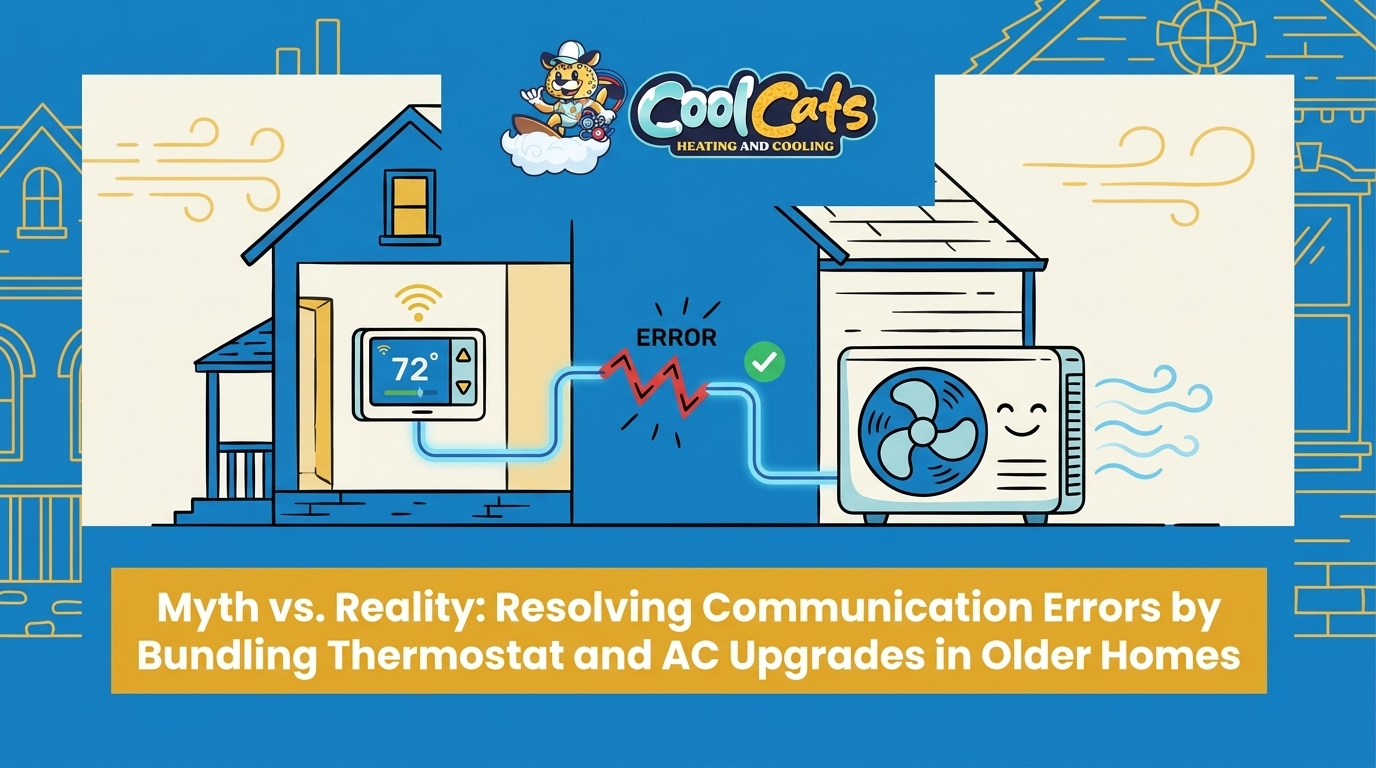
A pattern we see often after a mismatched installation is a series of unexplained communication errors. Your new air conditioner might suddenly shut down, or the thermostat screen might go blank, leaving you without climate control when you need it most. These nuisance lockouts happen because the advanced safety sensors in modern units are looking for specific data that an old thermostat simply cannot provide. This creates a critical decision point: do you try to reuse decades-old wiring and a legacy thermostat to cut initial corners, or do you invest in a fully compatible, bundled upgrade?
Modern climate technology requires equally modern control centers to function properly. Today's variable-speed communicating AC systems are designed to make micro-adjustments to fan speeds and compressor capacities based on real-time data. An old thermostat acts like a heavy door blocking that flow of information. By upgrading the thermostat alongside the air conditioner during your pre-heating-season tune-up or replacement, you ensure that the brain of your HVAC system is fully capable of directing its most advanced features, preventing the chronic errors that plague mismatched installations.
Decoding the Language Barrier: Analog Controls vs. Digital Compressors
To understand why old and new systems fail to communicate, it helps to look at the fundamental differences in how they operate. There is a massive technological gap between the thermostats built ten or twenty years ago and the systems rolling off the assembly line today. When our technicians handle an AC installation in Jacksonville, helping homeowners understand this language barrier is crucial for long-term reliability.
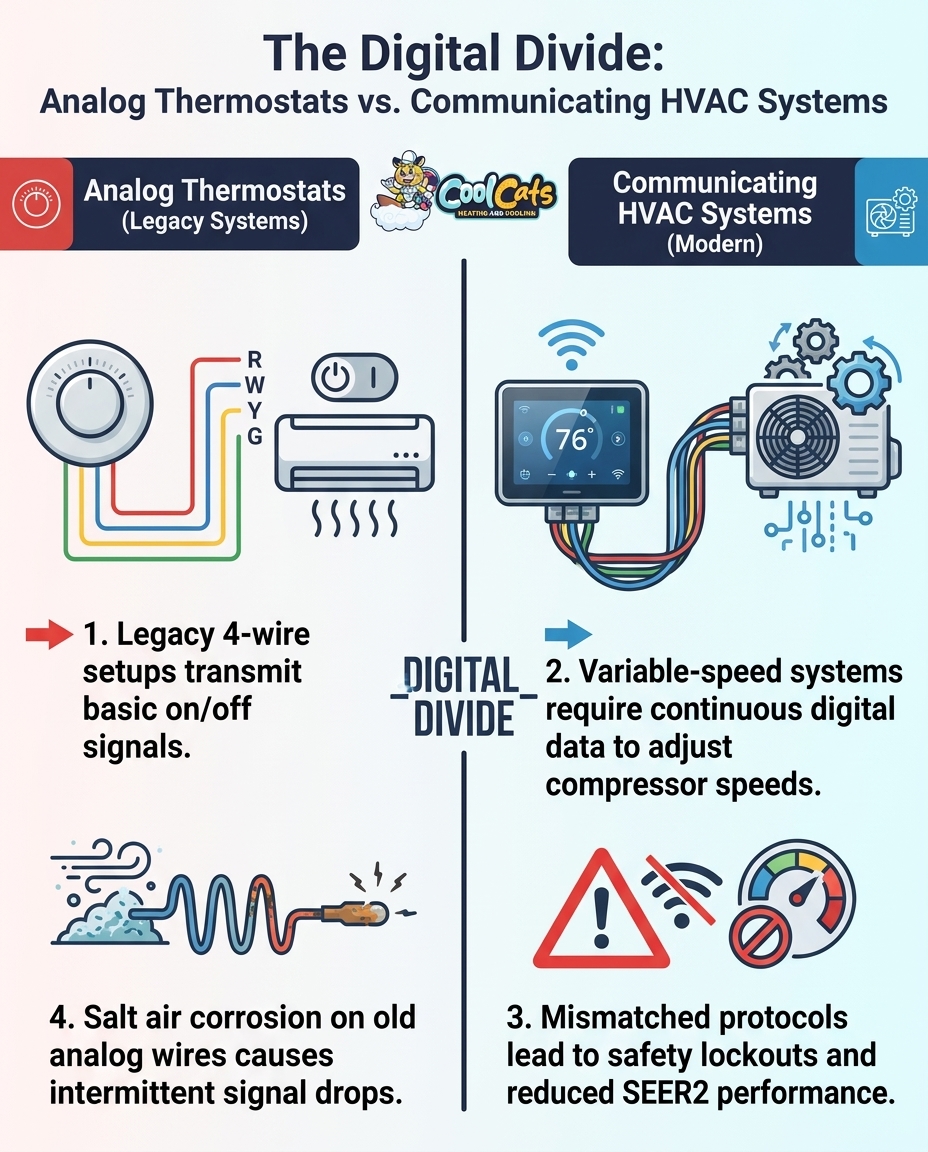
1. The Analog On/Off Command: Legacy thermostats use a simple analog system. They act exactly like a basic light switch. When the temperature in the room rises above your set point, the thermostat sends a basic electrical voltage down a single wire to turn the compressor on at 100% capacity. When the room cools down, it cuts the voltage, turning the system completely off. There is no middle ground.
2. The Digital Variable-Speed Requirement: Modern variable-speed communicating AC systems operate more like the accelerator pedal in a car. Instead of just turning on or off, they can ramp up to 100% on a blistering afternoon, or dial back to 30% capacity to gently maintain temperatures on a mild September evening. To do this, they require a constant stream of digital data from the thermostat, detailing exact indoor temperatures, humidity levels, and system diagnostics.
3. The Nuisance Lockout Protocol: When you pair a digital, variable-speed compressor with an analog thermostat, the air conditioner's control board stops receiving coherent signals. It expects a steady stream of data, but only gets blunt "on" or "off" jolts of electricity. When the control board senses this lack of data, its internal safety mechanisms assume a critical component has failed. The system goes into a protective "nuisance lockout" to prevent damage, shutting down your cooling entirely until a technician resets it.
4. The Efficiency Bottleneck: Even if a legacy thermostat manages to turn a new air conditioner on without triggering a lockout, it acts as a severe bottleneck. By forcing a variable-speed unit to operate in basic on/off cycles, you completely cap the system's SEER2 efficiency. You end up paying for high-efficiency technology but receiving standard-efficiency performance.
How Coastal Environments Accelerate Wiring Degradation
The communication issue between thermostats and air conditioners is not just about the devices themselves; it is heavily influenced by the physical wires hidden behind your walls. In our experience working on older Jacksonville Beach coastal properties, this physical infrastructure is often the weakest link in the entire cooling system. Homes built before the 1990s typically feature outdated 4-wire analog setups. These four tiny copper wires were perfectly adequate for the basic air conditioners of the past, but they lack the bandwidth and the physical integrity required for modern digital communication.
The Impact of Coastal Humidity: Living near the coast means dealing with intense summer heat and persistent high humidity that lingers well into early fall. Over decades, this moisture slowly permeates the walls of older homes. When this high humidity mixes with the natural salt air of the coast, it creates a highly corrosive environment for exposed metals. The thin copper wiring and analog terminals behind your thermostat are particularly vulnerable to this hidden corrosion.
Oxidation and Electrical Resistance: As the salt air attacks the copper wiring, a layer of oxidation forms on the surface of the metal. This corrosion acts as an insulator, increasing the electrical resistance within the wire. When the thermostat tries to send a signal to the air conditioner, this increased resistance causes a drop in voltage.
Intermittent Signal Drops: Modern AC safety sensors are incredibly sensitive. They monitor voltage and data packets continuously. When the corroded wiring causes an intermittent signal drop or a voltage fluctuation, the new air conditioner interprets this as a critical fault. The system will lock itself out to prevent an electrical fire or compressor damage. This is a common pattern when our crew provides Jacksonville HVAC services to older properties. For example, one local homeowner we recently helped had a very old, misplaced air and heat compressor that ran erratically. After a thorough assessment of the outdated setup, the best option was to install a completely new, properly configured system to restore reliable comfort. Upgrading the physical wire path is just as important as the equipment itself to ensure those crisp, clear digital signals reach their destination.
The Hidden Costs of Reusing Legacy Thermostats
It is easy to look at the immediate perceived savings of keeping an old thermostat and think you are making a smart financial choice. However, the long-term performance risks and hidden costs of reusing legacy controls far outweigh the initial savings. Forcing a mismatched system to work together creates a domino effect of operational issues that compromise both your comfort and your equipment.
• Chronic Short-Cycling: A primary symptom of poor digital-to-analog communication is short-cycling. Because the old thermostat cannot tell the new AC to run at a low, efficient speed, the system blasts cold air at 100% capacity, satisfies the thermostat quickly, and shuts off. Ten minutes later, it turns back on. This constant starting and stopping consumes massive amounts of electricity.
• Poor Moisture Management: During the September transition season, high coastal humidity requires precise, multi-stage communication for effective dehumidification without overcooling the space. Mismatched components struggle to manage this indoor moisture. The system cools the air too quickly to remove the humidity, leaving your home feeling cold but uncomfortably clammy.
• Premature Wear and Tear: The hardest part of an air conditioner's job is starting up. When an old thermostat forces a brand-new compressor into erratic start/stop commands, it places immense physical stress on the motor and electrical capacitors. This wear and tear can significantly shorten the lifespan of your new investment. If you find yourself frequently troubleshooting a heat pump that won't turn on, a mismatched thermostat causing premature component wear is often the culprit.
• The Illusion of C-Wire Adapters: Many homeowners try to bridge the gap with "quick fix" C-wire adapters. While these adapters can provide the continuous power that a smart thermostat needs to keep its screen on, they do not create the necessary data pathways. They supply power, but they do not solve the fundamental communication barrier between a digital compressor and an analog wire setup.
Side-by-Side: Retrofitting vs. Bundled System Upgrades
When planning a system replacement, you generally have two paths: retrofitting a new unit to your existing controls, or investing in a bundled system upgrade. Providing a clear, objective comparison helps clarify why our team at CoolCats recommends the bundled approach as the industry standard for modern, variable-speed communicating AC systems.
• Communication Protocol — Retrofit Approach (Old Thermostat): Mismatched (Analog to Digital) — Bundled System Upgrade (New Controls): Seamlessly Matched (Proprietary Digital)
• System Reliability — Retrofit Approach (Old Thermostat): High risk of nuisance lockouts and signal drops — Bundled System Upgrade (New Controls): Stable, continuous data transmission
• Dehumidification — Retrofit Approach (Old Thermostat): Basic on/off cooling; often leaves air clammy — Bundled System Upgrade (New Controls): Precise, variable-speed moisture removal
• Energy Efficiency — Retrofit Approach (Old Thermostat): Caps performance; prevents maximum SEER2 — Bundled System Upgrade (New Controls): Unlocks full variable-speed efficiency
• Rebate Eligibility — Retrofit Approach (Old Thermostat): Often disqualifies system from incentives — Bundled System Upgrade (New Controls): Meets criteria for qualifying high-efficiency credits
Bundled installations ensure that the thermostat and the air conditioner share the exact same proprietary communication protocol. They speak the same language right out of the box. Another local customer our team worked with dealt with an old air handler that died after 17 years of service. Following an initial repair attempt, it became clear that designing and installing a completely new, bundled system was the only way to guarantee long-term performance. This approach also unlocks advanced indoor air quality solutions, such as automated humidity control and proactive maintenance alerts directly on your screen. Furthermore, general energy rebates and federal tax credits for high-efficiency installations may apply, but they often require that the system is paired with compatible, qualifying controls to ensure it actually hits the promised efficiency targets. Always verify current programs with your utility provider or a tax professional.
The Risks of the Retrofit Approach
Choosing to retrofit carries significant operational risks. The higher likelihood of nuisance lockouts means you could find yourself without air conditioning on the hottest days or without heat during a sudden fall cold snap simply because a data packet was dropped. You completely lose the ability to utilize variable-speed dehumidification, which is essential in coastal climates. Most importantly, there is a potential for voided warranties. If improper wiring or severe short-cycling damages the new, expensive control board inside the air conditioner, manufacturers may deny warranty coverage due to improper installation practices.
The Advantages of a Bundled Upgrade
A bundled upgrade offers peace of mind through seamless digital communication. It maximizes your SEER2 efficiency, ensuring that your monthly utility bills reflect the high-efficiency equipment you purchased. Finally, running new, dedicated communication wires future-proofs your home. It ensures that your wiring is ready for smart home integration, advanced diagnostics, and years of reliable, uninterrupted comfort.
Frequently Asked Questions
Why is my new AC locking out with my old thermostat?
Your new AC requires a constant stream of digital data to operate efficiently, which your old analog thermostat cannot provide. When the AC's control board senses this lack of data, its safety sensors assume a malfunction has occurred. The system goes into a protective lockout mode to prevent potential damage to the compressor.
Do I need to rewire my older home for a new AC?
In many cases, yes, especially if your home was built before the 1990s and still uses a basic 4-wire setup. Modern variable-speed ACs require dedicated communication wires to transmit complex data. Upgrading the wiring also removes decades of hidden salt air corrosion that can cause intermittent signal drops.
What happens if a thermostat is incompatible with an AC?
An incompatible thermostat will act as a bottleneck, forcing an advanced variable-speed AC to run in basic on/off cycles. This leads to chronic short-cycling, poor humidity control, and increased wear and tear on the new motor. Ultimately, it prevents the system from reaching its rated SEER2 efficiency.
Do I need a new thermostat if I get a new AC?
While it is physically possible to force some new ACs to run on old thermostats, our technicians highly discourage it. Upgrading to a compatible, communicating thermostat ensures that your new system operates safely and efficiently. It is the only way to unlock the advanced features and energy savings you are paying for.
Can an old thermostat ruin a new AC?
Yes, an old thermostat can cause significant damage over time. By sending erratic start/stop commands and failing to communicate properly with the variable-speed compressor, it places immense physical stress on the new components. This constant short-cycling can lead to premature motor failure and potentially void your manufacturer warranty.
How do I ensure a seamless AC and thermostat install in Jacksonville?
The best approach is to request a bundled system upgrade where the thermostat and AC share the same proprietary communication protocol. Our team at CoolCats will assess your existing wall wiring for salt air corrosion and replace it if necessary. This guarantees clear digital communication and long-term reliability for your coastal home.
The Final Word on Thermostat Upgrades
At CoolCats, LLC, we believe that attempting to cut corners by pairing modern cooling technology with outdated controls rarely pays off. By bundling your thermostat and AC upgrade, you eliminate the risk of nuisance lockouts and ensure your home stays perfectly dehumidified as seasons change. A clear, properly wired digital connection is the best way to protect your investment and guarantee long-term reliability.
Customer Testimonials


Community Involvement


Latest Blogs
Resolving Communication Errors by Bundling Thermostat and AC Upgrades in Older Homes
Does a Labor Warranty Cover Coastal Corrosion on a New Jacksonville Beach AC Installation?