What to Expect from a Professional AC Contractor During a Jacksonville Beach Home Visit

The Anxiety of Opening Your Home to Contractors
Your cooling system is acting up just as the weather begins to shift, and you are already wondering what to expect from a professional AC contractor during a Jacksonville Beach home visit. It is incredibly common to feel anxious about scheduling maintenance. You know your system needs an early fall pre-heating-season tune-up, but the thought of a stranger tracking dirt, sand, or debris across your clean floors makes you hesitate. Many homeowners dread the service appointment more than the actual equipment problem. You want your indoor air handler inspected and your outdoor compressor serviced, but you do not want your living room treated like a construction zone.
Knowing exactly what interior protection protocols to expect allows you to distinguish true professionals from careless contractors. When you book professional air conditioning services, the technician should treat your interior living space with as much care as the HVAC equipment itself. Whether you are scheduling a simple filter change or comprehensive AC maintenance and replacement, a reputable company operates with strict standards that protect your property from the moment they pull into your driveway.
The standard of care in the HVAC industry has evolved significantly. Today, a top-tier technician understands that their job is twofold: fixing the mechanical issue and providing absolute peace of mind while inside your home. By understanding the baseline expectations for a professional visit, you can confidently open your door knowing your property remains safe, clean, and respected.
Arrival and Initial Communication Standards
A professional service visit actually begins long before the technician knocks on your front door. Clear, proactive communication is the foundation of a stress-free maintenance appointment. You should never have to guess when your contractor is going to show up or who is standing on your porch.
When preparing for an early fall pre-heating-season tune-up, you can expect the arrival process to follow a strict, courteous sequence:
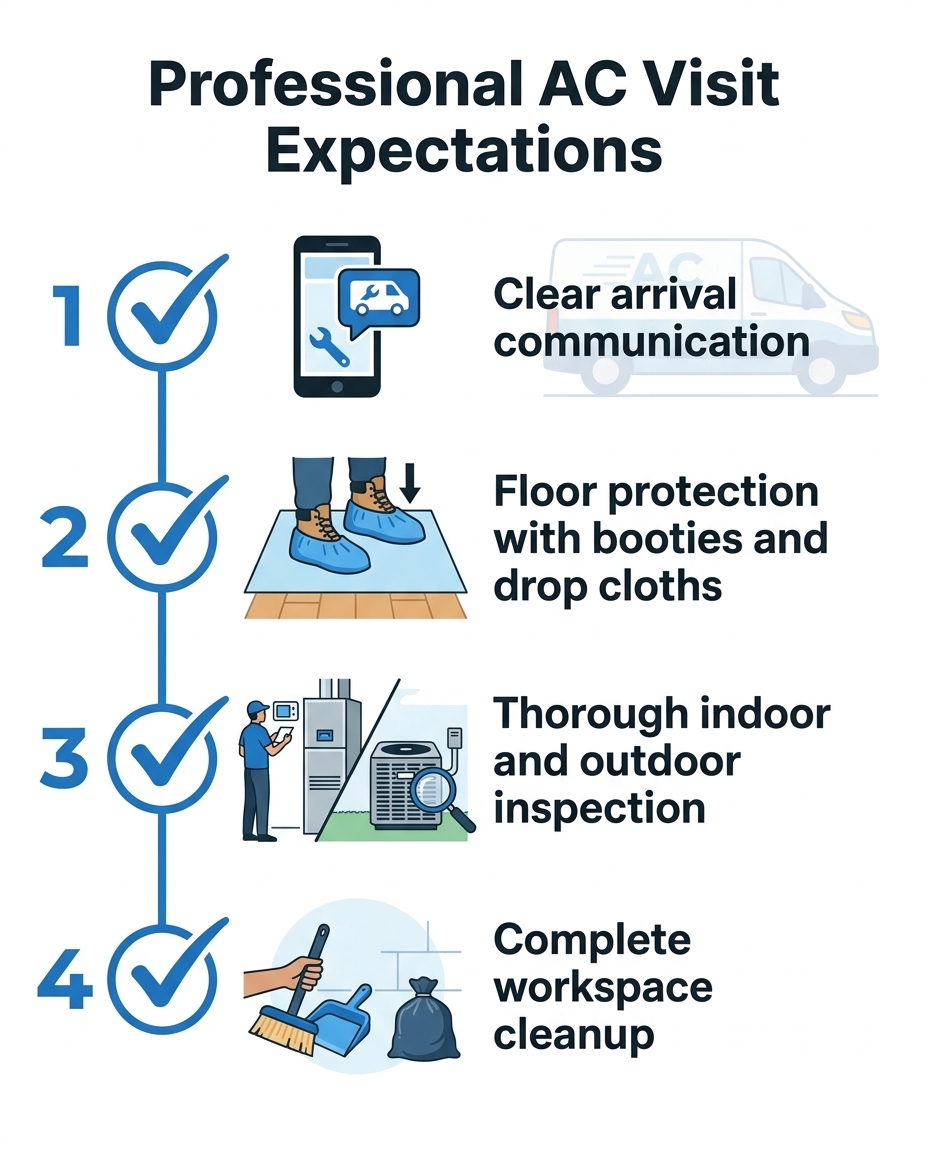
1. Proactive Dispatch Notifications: A reputable company respects your time. You will typically receive a text message or phone call when the technician is dispatched, often with a narrow arrival window so you are not waiting around all day.
2. Professional Identification: When the technician arrives, they should present themselves clearly. Expect a clean uniform, a clearly marked company vehicle, and proper identification badges. You should immediately know who you are letting into your home.
3. The Initial Consultation: Before opening a single tool bag, a professional will take a few minutes to speak with you. They will review the maintenance plan, ask about any hot or cold spots you have noticed, and listen to your specific concerns.
4. System Walkthrough: The technician will ask you to show them where the indoor thermostat, air handler, and outdoor condenser are located, allowing them to map out the safest walking path through your home.
This level of communication directly impacts the quality of the visit. A typical pattern we see is that when an air conditioner stops working, homeowners value prompt and courteous service right from the start. A clear initial conversation puts everyone at ease and ensures that the system is properly assessed, resulting in the home cooling down in no time.
Interior Protection Protocols: Keeping the Outside, Outside
The physical barriers used to protect your home's interior are where true professionals stand apart from the rest. Jacksonville Beach coastal homes are regularly exposed to fine coastal sand, airborne salt, and high humidity. If a technician simply walks in off the street, they bring those abrasive elements straight onto your hardwood floors, tile, and carpets.
To prevent property damage, technicians must implement strict physical barriers immediately. These strict home-protection protocols serve as the ultimate benchmark distinguishing our true professionals from careless contractors.
• Protective Shoe Covers: Before taking a single step inside your home, the technician must put on heavy-duty booties over their work boots. This simple act ensures that no outdoor mud, sand, or salt ever touches your floors.
• Heavy-Duty Drop Cloths: The area around your indoor air handler is a primary work zone. Professionals lay down thick, clean drop cloths to protect your flooring from heavy tool bags, dropped wrenches, or accidental scuffs.
• Tool Mats and Trays: Rather than setting metal tools directly on your countertops or tables, technicians use protective mats or specialized trays. This prevents scratches and keeps residual oil or grease away from your surfaces.
• Air Quality Management: Proper indoor air quality management requires keeping the active work area sealed off from outdoor particulates. When cleaning coils or replacing filters, a professional works carefully to ensure trapped dust is not released back into your home's airflow.
These barriers are non-negotiable. Your home is your sanctuary, and a service visit should never compromise its cleanliness. If a contractor attempts to walk through your living room without shoe covers, that is an immediate red flag regarding how they will handle your expensive HVAC equipment.
Navigating the Transition Between Indoor and Outdoor Units
Industry standard maintenance requires accessing both the outdoor compressor and the indoor air handler. Your HVAC system operates as a closed loop, meaning the indoor and outdoor components must work in perfect harmony. To properly assess the system, the technician cannot simply stay in one place.
This necessitates technicians transitioning between outdoor and indoor environments multiple times during the visit. They must check the outdoor refrigerant lines, then walk inside to measure the temperature drop at the indoor vents. They need to clean the outdoor condenser coils, then come back inside to inspect the indoor evaporator coil and clear the condensate drain line.
When providing Jacksonville area HVAC service, professionals use specific routines to manage this back-and-forth movement safely. Every single time the technician re-enters your home, they must re-apply their protective shoe covers or switch to a dedicated pair of clean indoor shoes. This constant transition can be tedious for the technician, but it is absolutely essential for protecting Jacksonville Beach coastal homes from tracked-in debris.
You should notice the technician carefully planning their trips inside and out to minimize foot traffic. They will bring the necessary tools in one trip and keep the doors closed behind them to prevent conditioned air from escaping and to keep outdoor humidity and pests from entering your living space.
Transparent Diagnostics and Honest System Assessments
Once the physical protections are in place, the technical inspection begins. An early fall pre-heating-season tune-up is highly comprehensive, designed to catch minor wear and tear before it turns into a major winter breakdown.
A thorough indoor and outdoor inspection includes verifying the thermostat calibration, replacing restrictive air filters, testing electrical relays, and verifying refrigerant levels. The technician is looking for signs of strain, such as a blower motor drawing too much amperage or a capacitor that is beginning to bulge.
After the physical inspection is complete, the communication phase resumes. Technicians should explain any identified issues clearly, using accessible language without resorting to confusing industry jargon. More importantly, they should never use high-pressure sales tactics. Homeowners should receive upfront options and objective advice on whether a simple fix is sufficient or if further planning is required to determine when you should schedule HVAC installation.
• Explains findings clearly with photo or video evidence from inside the unit. — High-Pressure Tactics (Red Flags): Uses vague warnings about the system being "dangerous" without proof.
• Offers multiple repair options ranging from a basic fix to a long-term solution. — High-Pressure Tactics (Red Flags): Insists that complete replacement is the only immediate option.
• Encourages you to ask questions and take time to make a decision. — High-Pressure Tactics (Red Flags): Demands an immediate signature to secure a "today only" discount.
• Focuses on the specific broken component and its function. — High-Pressure Tactics (Red Flags): Refuses to explain how the part actually affects your home's comfort.
A typical pattern we see is a homeowner calling because their unit needs a fix, but they are anxious because other companies have tried to aggressively upsell them in the past. A true professional correctly identifies and fixes only the necessary issue. They provide the facts, lay out the options, and let you make the best decision for your home and budget.
Workspace Cleanup: Leaving No Trace Behind
The final step of any professional visit is a meticulous cleanup of all designated work zones. The service is not complete just because the air conditioner is running again. A reputable contractor understands that leaving a mess behind completely ruins an otherwise excellent service experience.
Technicians will carefully pack up all their tools, ensuring nothing is left behind in your attic, utility closet, or yard. When removing the heavy-duty drop cloths, they roll them inward. This technique traps any dust, drywall flakes, or debris that fell during the repair, ensuring it is carried outside rather than shaken onto your clean floors.
Next, the technician will wipe down any accessed surfaces. If they had to open the indoor air handler cabinet, they will wipe away any smudges or fingerprints from the exterior. If they cleared a clogged condensate drain line, they will ensure the surrounding floor is completely dry.
The ultimate goal is ensuring the home is left cleaner than when the technician first arrived. For Jacksonville Beach coastal homes, this means double-checking that no sand was tracked in, no gates were left unlatched in the backyard, and all furniture that had to be moved is returned to its exact original position.
Common Questions About Home HVAC Visits
Do HVAC technicians need to come inside the house?
Yes, accessing the indoor air handler, thermostat, and ductwork is essential for a complete system check. Your HVAC system has critical components located inside, including the evaporator coil, blower motor, and primary air filter. A technician cannot properly diagnose or maintain the system by only looking at the outdoor unit. They will always need temporary access to the interior components to ensure proper airflow and safety.
How should I prepare my house for HVAC maintenance?
Clear a path to both the indoor and outdoor units, and secure any pets for their safety. Move any furniture, boxes, or stored items that block access to your indoor air handler or utility closet. Outside, trim back any overgrown bushes or branches that are touching the condenser unit. Finally, placing pets in a separate room keeps them safe from open doors and prevents them from getting underfoot while the technician carries heavy tools.
What happens during a professional AC maintenance visit?
A professional visit includes a comprehensive review of electrical components, moving parts, refrigerant levels, and system airflow. The technician will clean the outdoor condenser coils, clear the indoor condensate drain line to prevent water backups, and test the system's safety controls. They will also inspect the wiring for signs of wear and measure the electrical draw of the motors to ensure everything is operating efficiently before the season changes.
How long does an HVAC service call take?
A standard service call typically takes 1 to 2 hours, depending on the system's condition and the scope of the maintenance. A routine early fall pre-heating-season tune-up usually falls on the shorter end of that timeframe. However, if the technician discovers a complex issue that requires part replacement, or if the system has not been serviced in several years and requires extensive coil cleaning, the visit may take slightly longer.
Will the technician clean up after the service is complete?
A true professional will always use drop cloths and perform a complete workspace cleanup before leaving. You should never have to sweep, vacuum, or wipe down surfaces after a contractor leaves your home. The technician will roll up their protective floor coverings to trap dust and wipe down the equipment cabinets, ensuring your home is left in pristine condition.
Scheduling Your Next Service with Confidence
Having a clear outline of the exact steps and protocols a professional technician takes provides incredible peace of mind. You no longer have to worry about the logistics of the visit or the safety of your floors. When you know what the standard of excellence looks like, you can easily spot the difference between a contractor who cares about your property and one who is just rushing to the next job.
You should expect nothing less than complete respect for your property, transparent communication, and meticulous cleanup. Whether you are preparing for the changing seasons or addressing a sudden breakdown, your home deserves top-tier protection.
If your system is due for its early fall pre-heating-season tune-up, do not let the fear of a messy service call hold you back. Reach out to a dedicated team that prioritizes your comfort and treats your home exactly the way you do.
Customer Testimonials


Community Involvement


Latest Blogs
What to Expect from a Professional AC Contractor During a Jacksonville Beach Home Visit
Resolving Communication Errors by Bundling Thermostat and AC Upgrades in Older Homes